This dev log contains all instances of my contribution towards each of the prototypes, the pitch, and the final product that was created for the game in general.
Establishing the team
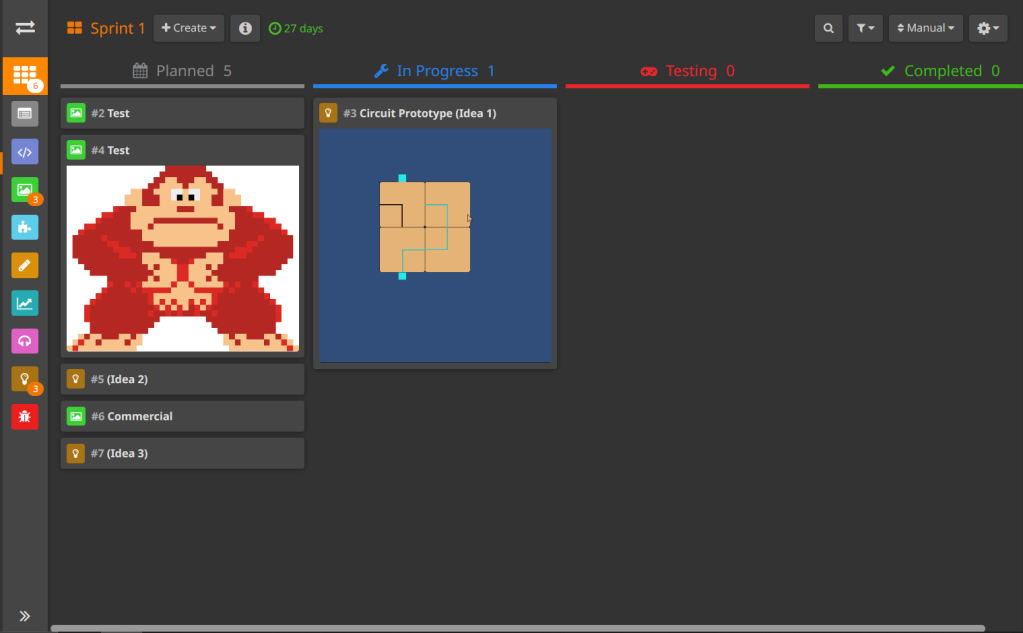
Our team’s work environment was quickly established through the use of “hacknplan” on February 2nd, and process on beginning the plan for the 3 prototypes began. This was done through initial discussion on various ideas, since our final had to be based around the theme of “Resist” (Strange theme choice but I’m not one to judge, since I’m not the tutor).
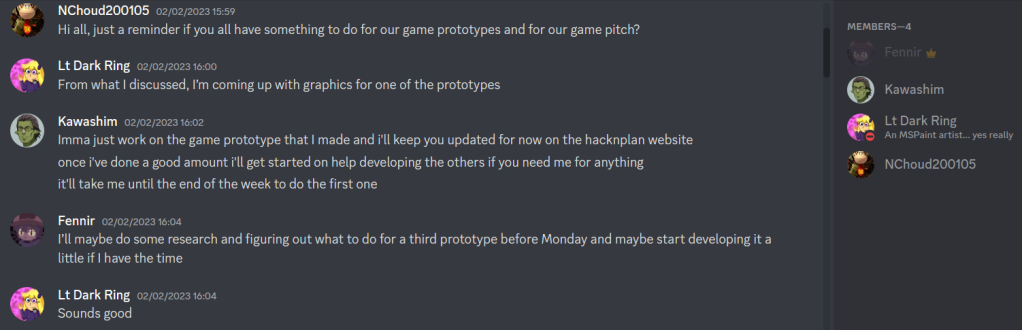
We also established a discord group chat between us, as to communicate idea’s and concepts efficiently amongst each other.
Prototype #1
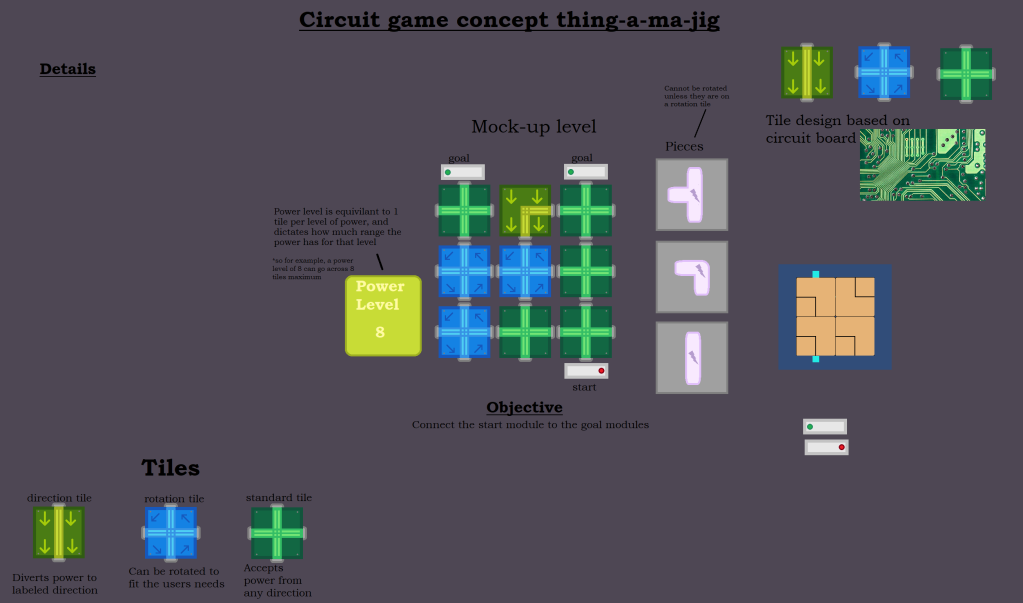
The first idea that was discussed, was of a circuit board like game, where the player would be tasked in connecting one end of the circuit board to the other, or in simple terms, connect a path from point A to point B. A fairly simple concept, but with some unique and interesting mechanics, it could have the potential to become a fully fledged product.
I swiftly conjured up this piece of a mock up concept for the prototype. Whilst it wouldn’t be the definitive idea that was used for the prototype, notes could still be taken in terms of ideas for it.
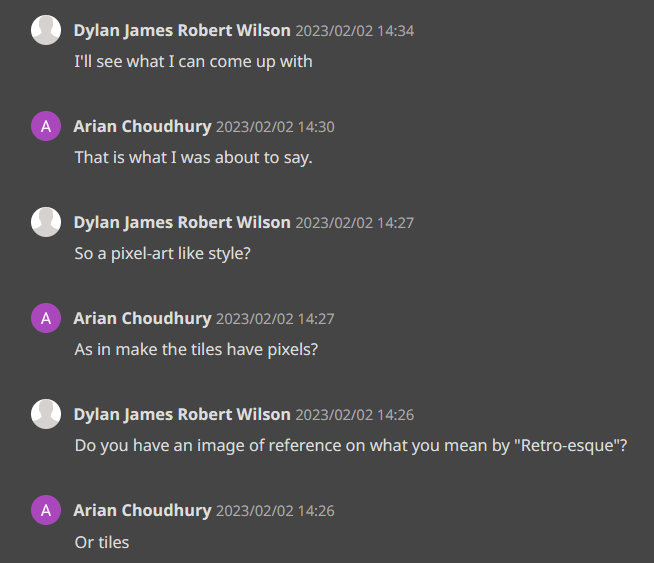
Afterwards, I decided to experiment with one of the tiles designs, with the team looking to give the design of the tiles a pixelated, since that is one of the team members requested.
Swiftly, these 9 designs were conjured up for one of the tiles, in a pixelated style scaled up by 4 times as to allow the image to easily be viewed. 3 designs were made, consisting of a different base, with different end pieces on each side, which were then duplicated into a 3 by 3 grid, with various tests in terms of designs, which provided the following the results.
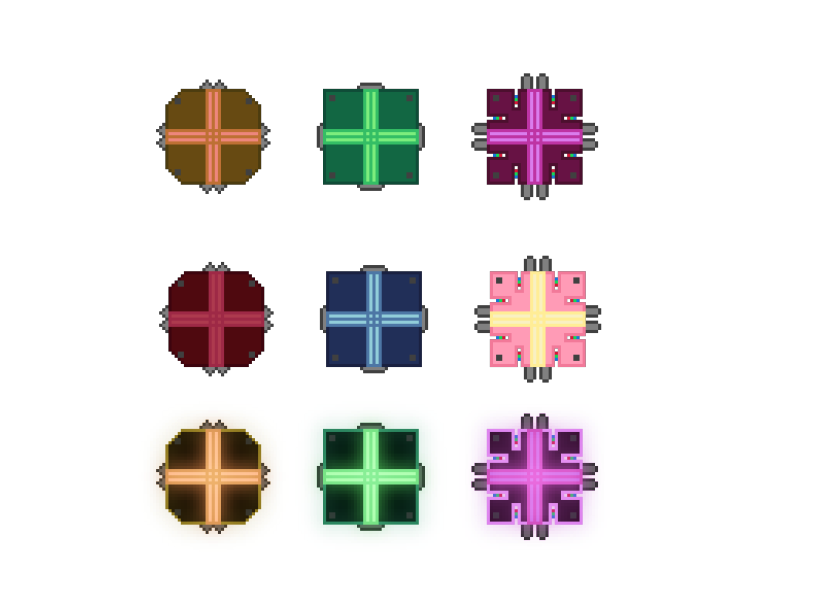
The top row is each of the base designs for the tiles, the middle being the standard tile, the left being of a more jagged looking tile, and the right being of a more futuristic looking tile, with some of the wires underneath being shown.
The middle row comprises of simple recolours, and no major design changes, mainly just as a way to see how the tiles would look like with a different colour pallet.
The bottom row is a more neon based approach, where the tiles consist of both bright outlines and near black base colours, with a unique glow effect added to each of the tiles outlines. This bottom row is the one that I am the most proud of out of the experiment designs, since not only does it grant each of the tiles a unique distinction from one another, but it also makes it have this futuristic vibe which especially helps with the right tile’s design in particular.
After a discussion, the team expressed interest in the bottom middle design of neon green, wanting to see the design transferred into several different pieces (being the usual straight, Right angle, and Intersection pieces). After some tweaking and general discussions, these were the designs I conjured per the teams request.
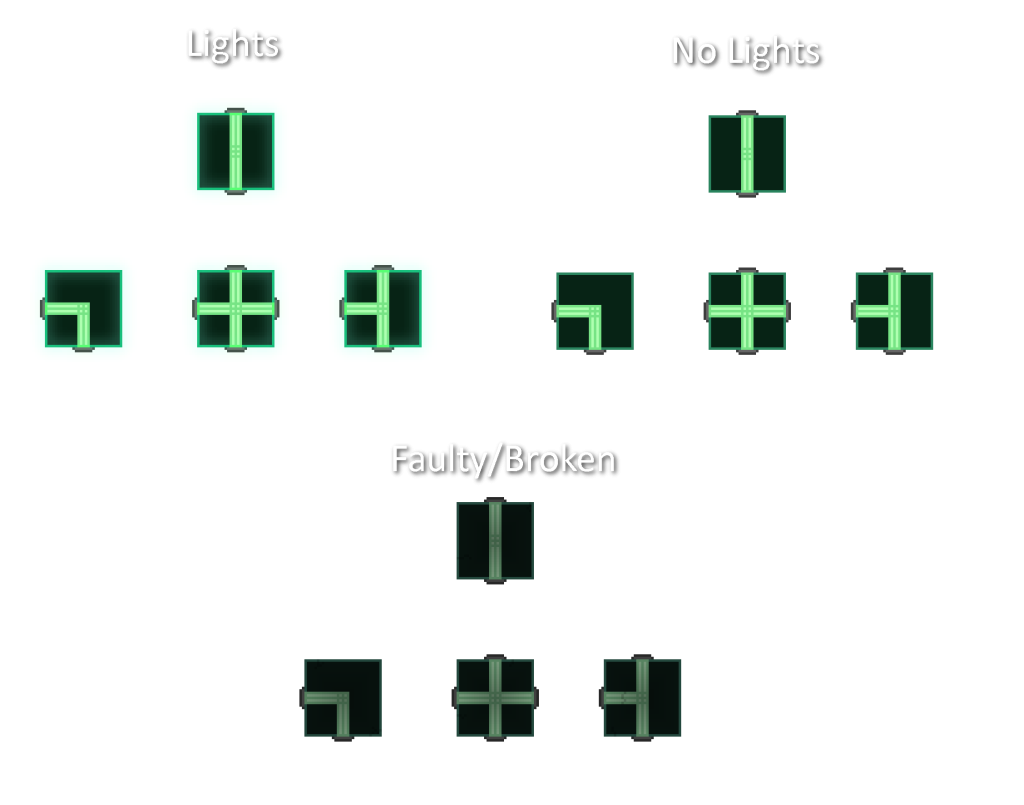
The implementation of the tiles was proven to be a success, though the team request for the tiles in a large upscaled form, as to avoid graphic complications down the line. Wanting to ensure that the tiles were at a high enough resolution for the team to use, I took the base size of each tile (most of which on average were about 35 by 35 pixels, and upscaled them by 20x, making them 700 by 700. Their design remained the same in terms of a pixelated form, though it was now scaled up for the team to use efficiently for their needs.
Prototype #2
Our second prototype that we would develop for our presentation, would be of a top down shooter defence game. The player would take control of a defender in the skies, as they shoot at the enemies that try to attack and overwhelm the wall that keeps the base protected.
This prototype combines the main gameplay aspects of an indie game known as storm the house’s player interaction, with the strategy and trap placement tactics with the likes of both Orcs must die and dungeon defenders.
I thought about the concept a little more in terms of art style and execution, before drafting up a quick prototype screenshot of how the game would roughly look.
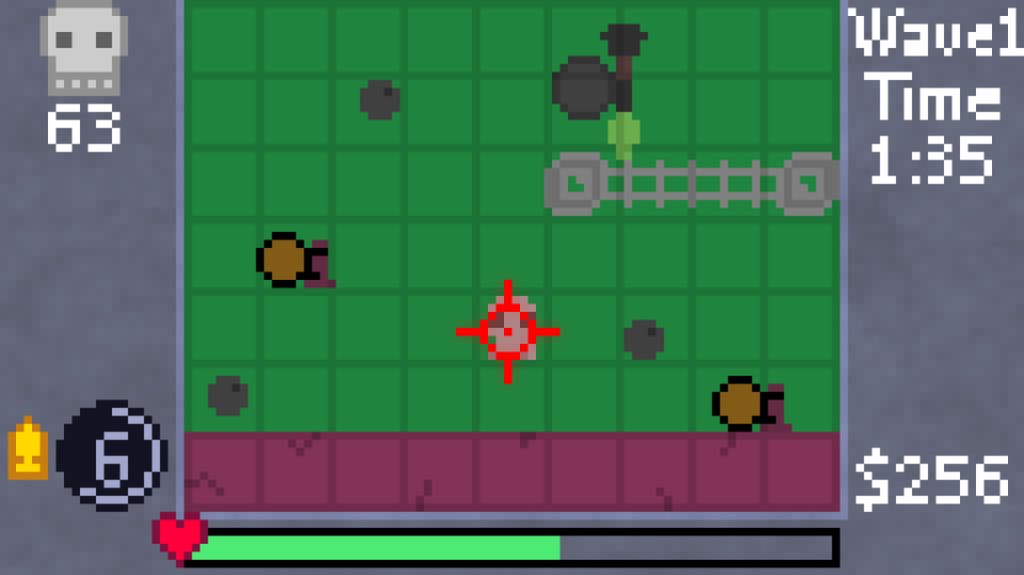
Enemies would come in from the top of the screen, and depending on what type of enemy they are, would either walk straight towards the wall to damage it, or hang back and destroy the wall from afar using their weapons.
The player has 2 ways of killing them, either through shooting the enemies by clicking on them, or if the enemy triggers a trap meant to kill them (such as a landmine for example). The enemies will at first die relatively easily, though overtime, tougher enemies will show up, requiring more bullets/traps to kill.
Not all traps would be for killing enemies. Some such as barbed wire, will slow and lightly damage enemies that pass through it. These kinds of traps often will force enemies to take different routes, which the player can use to their advantage, either filling all enemies into a single area for maximum efficiency, or to make enemies take the longest route possible as to stall for time.
I shared this concept to the team, upon them seeing it, they stated the following.
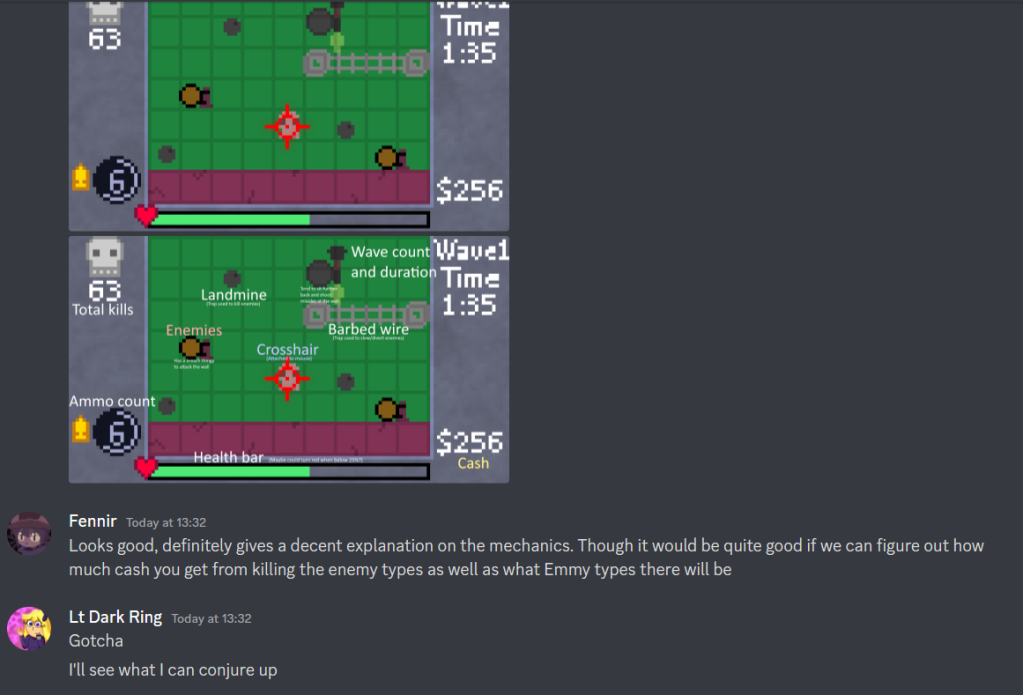
The team seemed to be on board with the idea, and wanted more concepts for each of the enemies and traps, as so that they could have as much information to work with as possible when it comes to creating a working prototype for the game.
I swiftly got back to work, and conjured these dedicated tables for both the enemies, as well as the various traps that the player could potentially use.
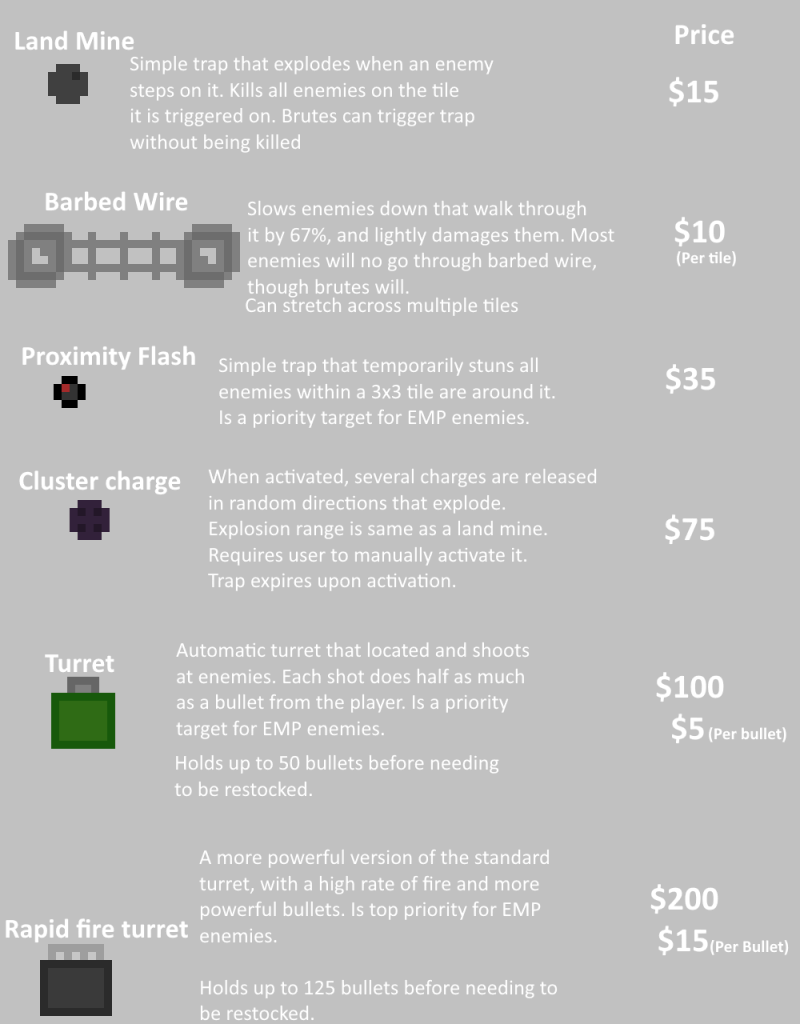
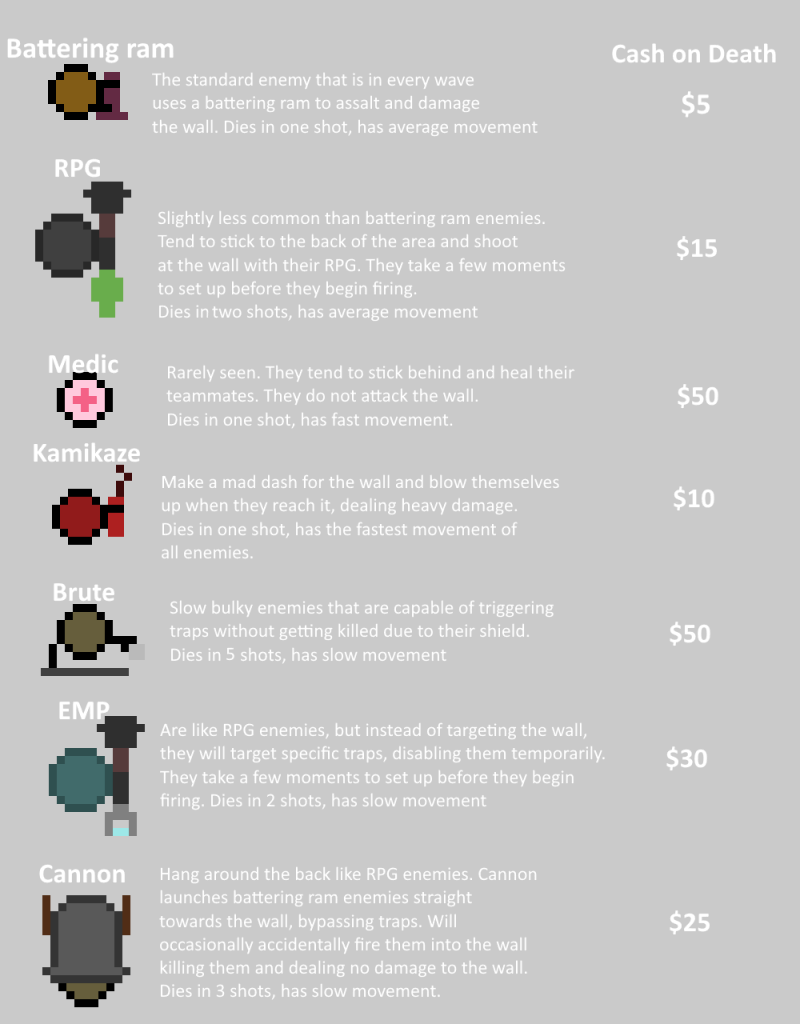
The simple nature of these pixelated graphics were kept in a simplistic manner as to not only clearly give each enemy a distinctive appearance, but also allow the player to make this exact distinction quickly and cleanly, without it becoming too messy or convoluted to the player during the later stages of gameplay, where many different types of enemies would show up continuously.
The team were impressed and intrigued by the designs, and were on board with the idea of the prototype.
Prototype #3
Prototype 3 is something that I myself have little participation in terms of designing graphics for it, since the game mainly operates in a 3D environment, and designing objects in a 3D space is something that I wasn’t confident in yet, so I stuck to designing things mainly in areas where 2D assets would be needed (such as UI elements, icon graphics, atc).
When enquiring about what assistance I could yield for the prototype, I was given this in response since at the time, we wasn’t sure if this was going to be the one that we would turn into a full project, and a collective decision had not been made yet.
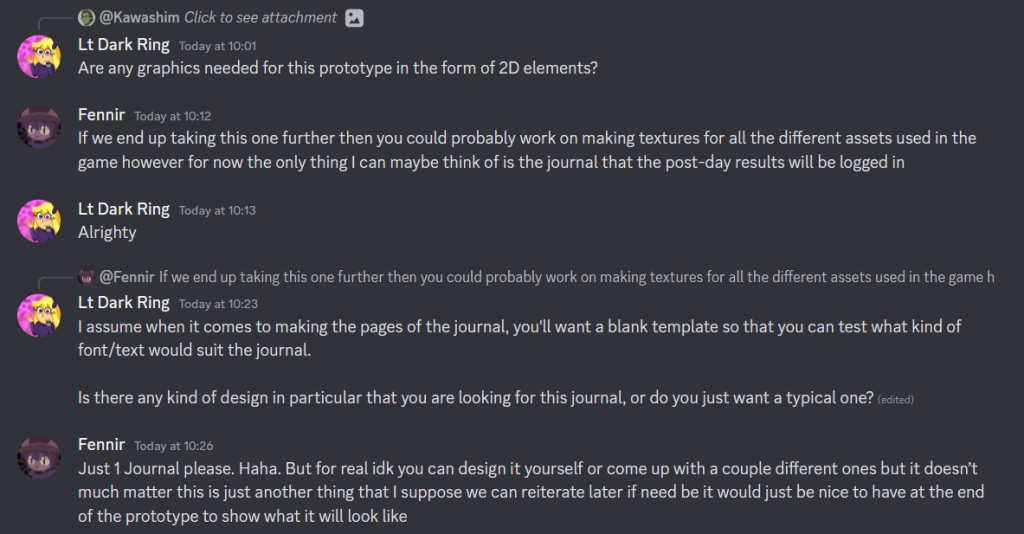
Taking notes, I began to work straight away with the concept design of the journey per their request.
First I started with a base template made in Paint.net composing of 3 layers. One that revolved around the base layer, one that had all of the text, and one layer that had all of the details that showed the Journals age, as shown here.

This would work as the base template for when it would come to figuring out some general designs for the journal.
Since the game would be taking place within a fairly cold environment, I decided to make a copy of the journal, and give it a general frozen like-theme, as to match the games environment.
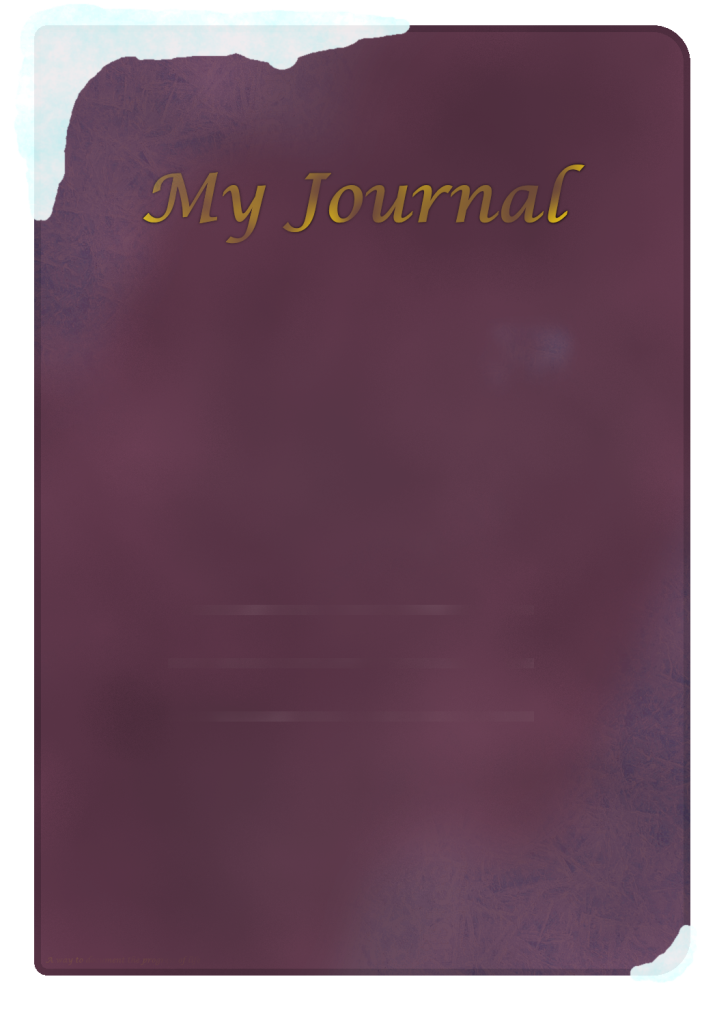
This was achieved through shifting the hue’s of the base template, along with stacking on an ice and snow effect around the opposite corners of the Journal. Alternatively, the text was made slightly more faded as to show it more falling apart from the harsh weather conditions.
Establishing The Pitch
For the first third of the assignment, we were expected to conjure up a presentation pitch for at least 3 different ideas for a prototype.
This would be done through a google slides presentation for ease of access, as so that everyone can tap in whenever they need to do either a little touch up, or to rework a part of the pitch entirely if needed be.
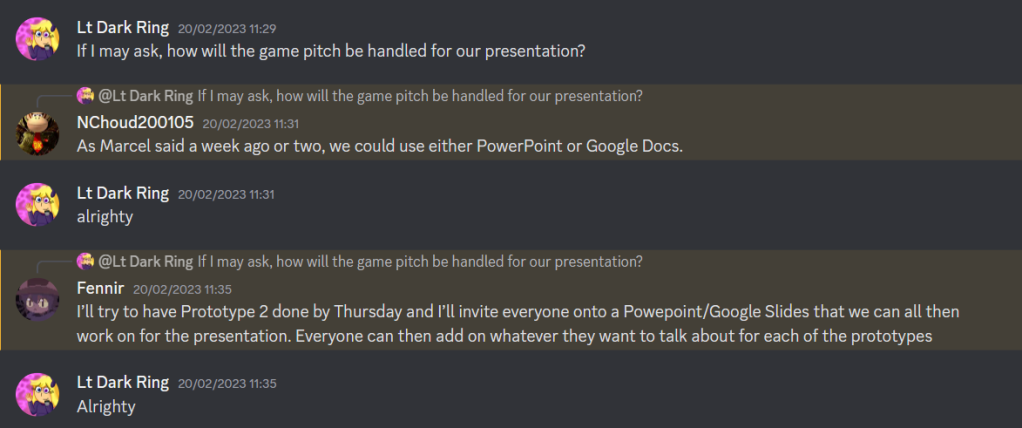
The presentation would then be conjured up, and everyone would slowly start to add in their contributions piece by piece.
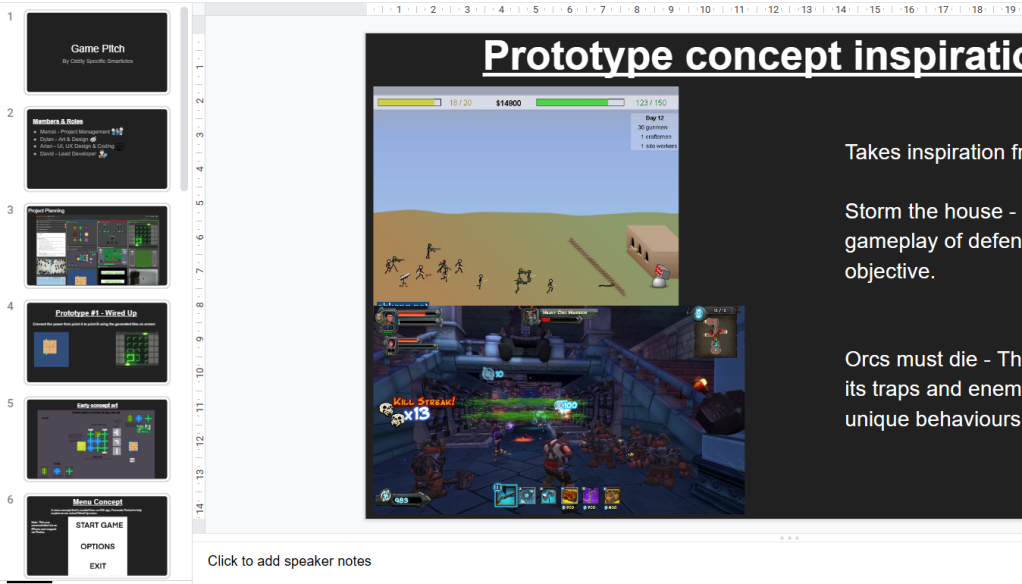
Each prototype would be given an adequate number of slides, as to ensure that they each would be covered in enough detail, in hopes that we can get the point across for the audience to understand cleanly and fluently when we would come to the presentation.
It would also be around this time that we started considering the idea for which of the 3 would be our main prototype that we would develop into a full project. Whilst several smaller discussions had occurred over the course of the past few weeks, no one within the team had an official answer (Likely because at the time, we were all heavily focused on the presentation at the time, rather than the actual games themselves.
When the presentation was close to a finished state, I enquired about which one we would turn into a full game, and develop further. This was the response that was received when I posted my initial enquiry.
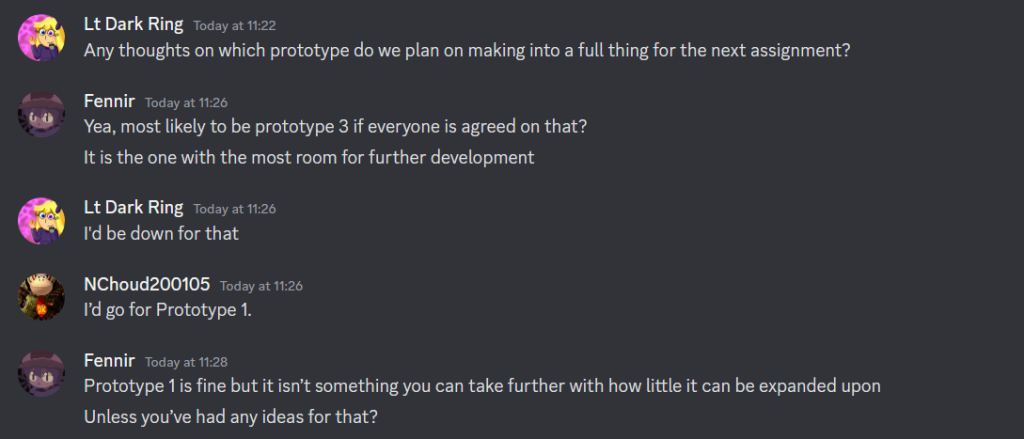
It seemed like a majority of the team were in favour of the Arctic Exodus prototype (Prototype #3), with only one of them suggesting the Wired Up prototype (Prototype #1), though that suggestion was swiftly questioned by other members within the team, expressing that whilst the prototype was deemed to be in an acceptable state, it wasn’t something that could be expanded on much with how simple it’s concept it.